Walk My World: Converting Curiosity Into Ticket Sales
How strategic UX and constraint-driven design boosted ticket conversions by 7% for Hungary's first immersive new circus experience.
my role
UX/UI Designer
UX Research & Analysis
Stakeholder Coord
constraints
3rd party ticketing platform (jegy.hu)
Mandatory external page redirects
Fixed checkout flow limitations

Challenge
Walk My World, Recirquel's groundbreaking immersive circus experience, faced high ticket purchase abandonment despite strong initial interest. The unique 6,000 square meter mythical world concept wasn't converting curiosity into sales.
Technical constraints compounded the challenge: jegy.hu's mandatory redirects, inflexible checkout flows, and limited customization options created additional friction in the purchase journey.
Solution
Through comprehensive user research, technical constraint analysis, and strategic design thinking, I developed a solution that addressed both user experience gaps and technical limitations.
The redesigned flow improved user understanding of the immersive concept while optimizing the pre-purchase experience within jegy.hu's constraints, resulting in a 7% increase in ticket sales within the first month.
research & discovery

Methods used
Comprehensive UX audit of the ticketing flow
Clarity analytics and heatmap analysis
Usability testing with target audience
Technical constraint workshop with jegy.hu
Competitive benchmarking
Stakeholder interviews
Key findings
Users didn't understand what "immersive" meant in this context, struggling to grasp the unique nature of the show and how it differed from traditional circus performances.
Insufficient information
Potential buyers felt they lacked enough detail about the experience to justify the ticket price, leading to hesitation at the crucial decision point.
Technical friction
The unexpected redirect to jegy.hu without warning created a jarring user experience that broke trust and momentum in the purchase journey.
design process

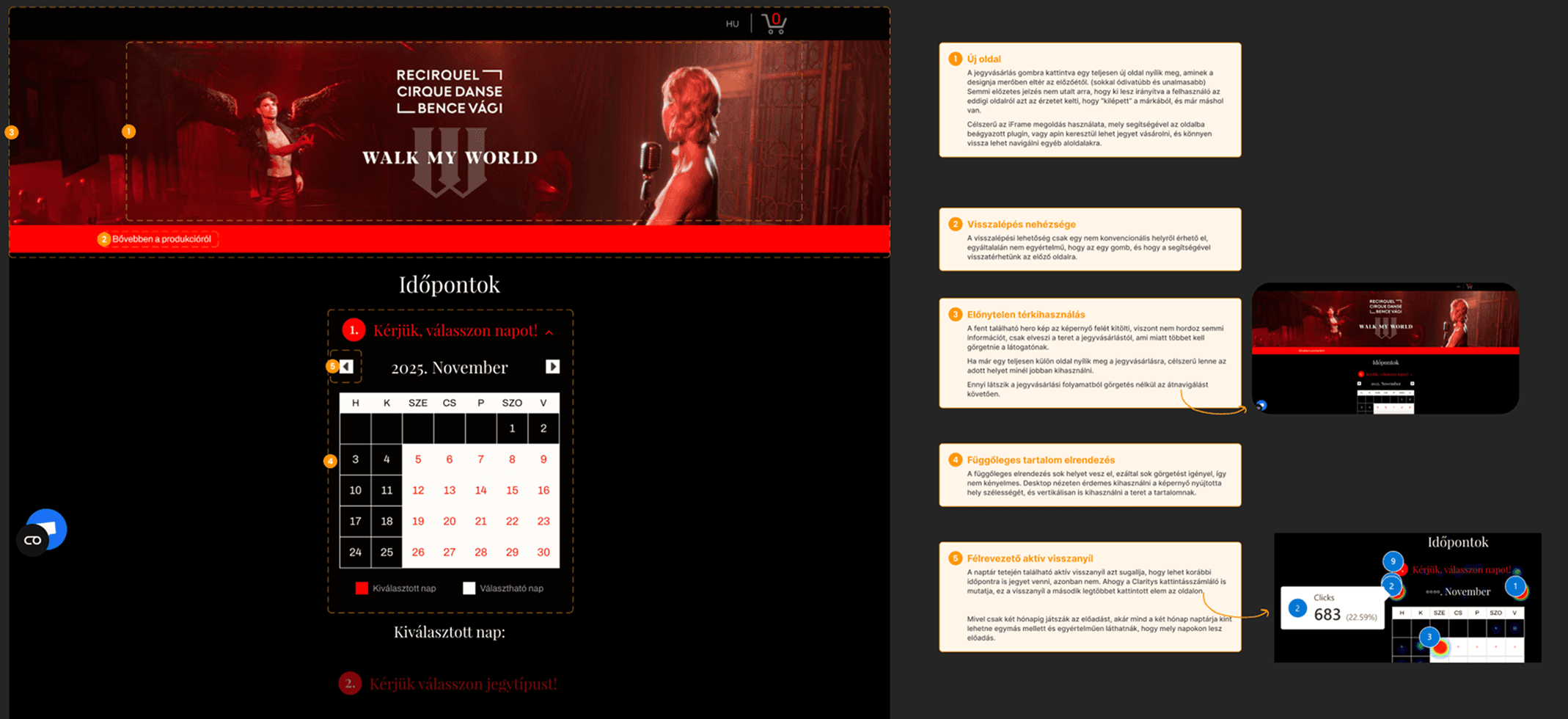
Comprehensive flow analysis
I mapped the entire user journey from initial interest to completed purchase, identifying friction points through analytics data and user behavior patterns. The analysis revealed critical moments where users dropped off, particularly at the transition to the external ticketing platform.
Wireframing
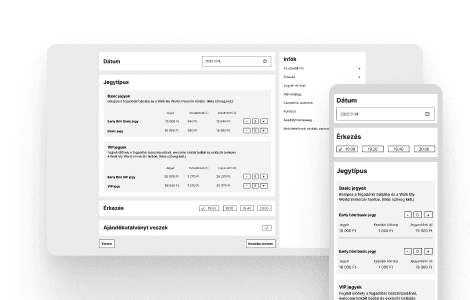
Created detailed wireframes focusing on the pre-purchase flow and potential jegy.hu integration points.
These wireframes served as a validation tool, allowing us to test compatibility with jegy.hu's technical requirements before investing in high-fidelity designs. This approach prevented costly revisions and ensured our proposed solutions could actually be implemented within their platform constraints.
Accessibility & brand evolution
The existing visual design posed WCAG compliance issues and color choices that hindered conversion. I carefully evolved their brand identity to maintain artistic authenticity while improving usability and accessibility standards.
solution

Redesigned Pre-Purchase Experience
The solution focused on the controllable touchpoints before users entered jegy.hu's system. I redesigned the information architecture to better explain the immersive concept, added compelling visual storytelling elements, and created clear expectations for the purchase process.

Mobile first approach
Recognizing the importance of mobile conversions, I prioritized the mobile experience while ensuring desktop parity, creating responsive designs that worked seamlessly across devices.

Impact
7% increase in ticket purchases within the first month of implementation
Reduced technical friction by optimizing the handoff between Walk My World's site and jegy.hu's system
retrospective
Takeaways
This project reinforced the importance of working creatively within constraints rather than against them. The success came not from fighting jegy.hu's limitations, but from optimizing every touchpoint we could control while preparing users for the parts we couldn't.
The research phase proved crucial, understanding that users didn't grasp the "immersive" concept was the key insight that drove all subsequent design decisions. Sometimes the most important problems aren't interface issues but communication gaps.
Working with multiple stakeholders (client + technical partner) required careful diplomacy and clear communication to align everyone's goals while respecting each party's constraints and expertise.